Why a Warmer USDA Zone Does Not Prevent Sudden Cold Snaps
Massachusetts gardeners may see a warmer USDA hardiness zone for their area and assume tender plants can go outside earlier or need less protection. But a zone describes long-term winter temperature patterns, not the weather on a particular night. Understanding that difference helps you plan planting dates, assess frost risk, and protect vulnerable plants when temperatures suddenly drop.
What a USDA hardiness zone tells you—and what it does not
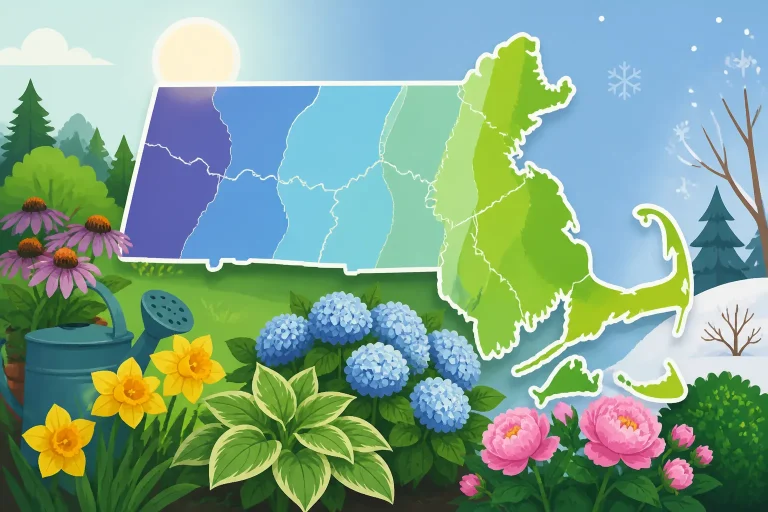
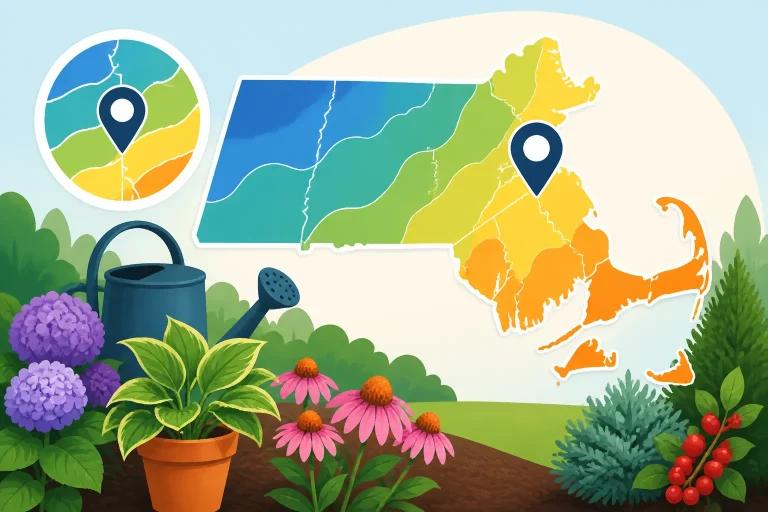
The USDA Plant Hardiness Zone Map groups locations by average annual extreme minimum winter temperature. It is useful for comparing whether perennial plants, shrubs, and trees are likely to survive typical winter lows in a particular area. If an area falls in a warmer zone than it did on an earlier map, that indicates a shift in the long-term temperature measure used to assign zones.
It does not mean that every winter night will be mild. It does not tell you the lowest temperature a site can experience, how often cold snaps occur, or when the last spring frost will happen. Nor does it measure the length of the growing season or tell you when the soil will be warm enough for seeds to germinate.
A cold snap is a short spell of unusually cold weather. It can occur during a generally mild winter, after a warm stretch in spring, or before the growing season has fully ended in fall. A plant may be suited to an area’s hardiness zone and still suffer damage if it puts out tender new growth before a sudden chill.
That distinction matters because perennial survival and seasonal planting are different questions. A hardy shrub may tolerate the lowest winter temperatures expected in its region once it is established and dormant. A tomato seedling, newly planted annual, or emerging perennial shoot is a different matter: fresh growth can be vulnerable to cold even where the mature plant might otherwise grow successfully.
| Question | What the USDA zone can help with | What it cannot tell you |
|---|---|---|
| Is a perennial likely to survive typical winter lows? | Provides a broad regional starting point | Guarantees survival at a particular garden site |
| Is it safe to plant warm-season vegetables now? | Offers little direct guidance | Local frost risk, soil warmth, or the timing of the last spring freeze |
| Could a sudden cold night happen? | Does not rule it out | The forecast for a specific night |
| Will a garden bed warm up early? | Does not measure soil conditions | Soil temperature, moisture, or exposure |
| Should a plant need winter protection? | Helps inform plant selection | How exposed or sheltered the planting spot is |
A ZIP code or area falls in a zone on the USDA Plant Hardiness Zone Map; that is not the same as assigning a zone to every garden within it. Garden conditions can differ within the same town, and a map does not capture every slope, low spot, sheltered courtyard, or exposed yard. For more on what a zone can and cannot indicate, see Finding Your Massachusetts Hardiness Zone by ZIP Code.
Why Massachusetts can have a cold snap in a warmer-zone area
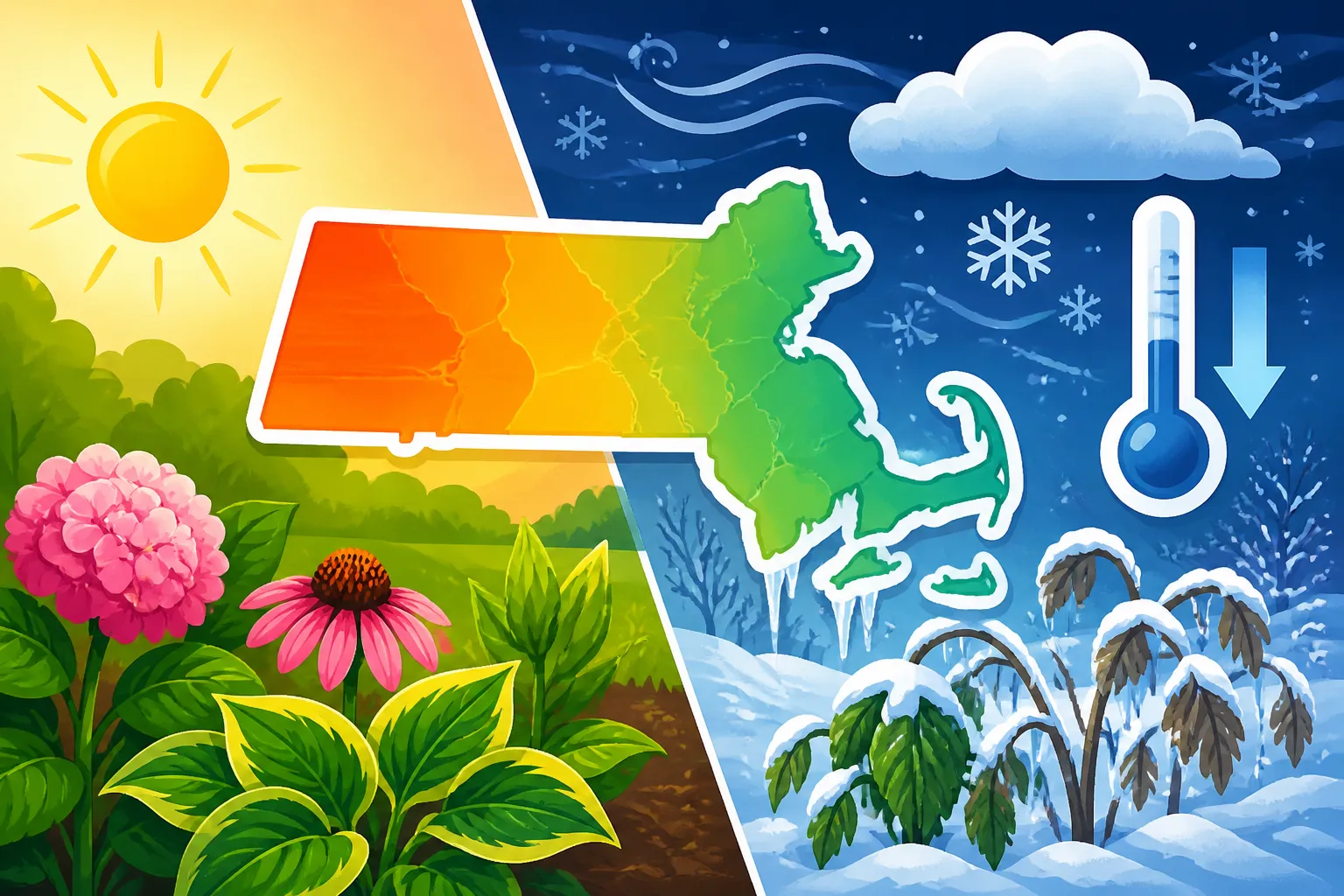
A zone is based on a long-term average, while a cold snap is a particular weather event. Those two measures can coexist: an area can have a relatively warm long-term average and still experience a damaging cold night. The zone does not function as a minimum temperature guarantee.
Massachusetts also has substantial local variation. Coastal influence, elevation, terrain, wind exposure, and the placement of buildings and plants can all affect conditions in a garden. A shoreline site may experience different temperature patterns from an inland site, while a low-lying hollow can collect cold air even when a nearby slope stays somewhat milder. These are tendencies, not guarantees for any specific yard.
Cold air is denser than warm air and can settle in low places when conditions allow it to drain downhill. That means a garden at the bottom of a slope may be more exposed to a frost than a nearby garden higher up. A sheltered wall or a dense planting may offer some protection from wind, but it cannot ensure that tender foliage will escape a freeze.
Weather-station records also have limits when applied to an individual garden. A station provides useful regional information, but its surroundings may differ from your site. A nearby station may be at a different elevation or farther from the coast, and a garden’s cold-air drainage or exposure may be unlike the station’s. That is why a station-based frost estimate is a planning aid rather than a promise. Why Microclimates Differ from Weather Station Freeze Records explains how local conditions can differ from recorded observations.
The season matters, too. In spring, an unusually warm period can encourage buds, shoots, and seedlings to grow. A later return to cold may harm that tender growth, even if the plant is hardy enough to survive winter in the area. In autumn, a cold night can end the season for warm-season vegetables, while a cold-hardy crop may continue to grow or remain harvestable. Different plants respond differently, so the same forecast does not carry the same risk for every bed.
This is one reason Massachusetts does not have one dependable frost date that applies statewide. Regional conditions and microclimates vary, and a date based on historical records does not predict the weather in a particular year. See Why Massachusetts Has No Single Statewide Frost Date and Massachusetts Frost Dates and Freeze Probabilities: A Station Guide for help interpreting regional frost information.
How to use a warmer zone when planning a planting calendar
A warmer zone can inform plant selection, especially for perennial plants whose winter survival depends on cold tolerance. It should not be used on its own to set vegetable sowing or transplanting dates. For those decisions, combine regional planting guidance, local forecasts, soil conditions, and the cold tolerance of the crop.
Start by identifying what you are planting and what stage it is in. Seed in the ground, a hardened-off transplant, and a newly emerged seedling may not respond to cold in the same way. A mature plant may be more resilient than a small transplant, but its tolerance depends on the crop and the conditions. Check the plant’s recommended growing conditions rather than assuming that a warmer zone means it can tolerate an unexpected chill.
Next, distinguish frost risk from soil warmth. Some seeds can be sown into cool soil, while warm-season crops generally need warmer conditions to grow well. A frost-free forecast alone does not mean the soil is ready. Conversely, a stretch of warm weather does not prove that the risk of another cold night has passed. For crop-by-crop timing, Massachusetts Sowing Windows for Cool and Warm Season Vegetables and Massachusetts Vegetable Planting Guide: Schedules by Region can help organize your plan.
A practical planting decision uses several kinds of information:
- Check the crop’s cold tolerance. Decide whether a light frost, a hard freeze, or cool soil is the main concern for that plant.
- Use regional frost information as context. Historical estimates help frame risk, but they are not fixed dates for your yard or a guarantee for the current season.
- Check the short-term forecast. Watch for falling overnight temperatures and local frost or freeze alerts before setting out tender plants.
- Consider your site. Note whether the bed is exposed, sheltered, on a slope, or in a low area where cold air can settle.
- Make a flexible decision. Delay planting, protect plants, or accept some risk according to the crop’s value and your willingness to replace damaged growth.
A calendar is most useful as a range of possible planting windows, not as a command to plant on a particular day. If weather runs cold, waiting is reasonable. If a mild stretch arrives early, it may still be wise to keep tender transplants protected until the forecast and local conditions are more favorable. Planning Massachusetts Sowing Around Spring Freeze Probabilities offers a way to account for uncertainty rather than treating an average date as a guarantee.
For warm-season crops, the consequences of planting too early can include damaged leaves, slowed growth, or the need to replace plants. Seedlings started indoors may be especially vulnerable if they have not been gradually acclimated to outdoor conditions. Hardening off helps plants adjust to sun, wind, and temperature changes, but it does not make them immune to freezing weather. See Hardening Off Indoor Seedlings Before Spring Garden Transplanting and Protecting Warm-Season Starts from Unseasonal Late Spring Chills for more on managing that transition.
Fall planning works in the other direction. A warmer zone does not promise a long, frost-free autumn. Use the crop’s maturity needs and the remaining weather as guides, and be ready to harvest tender crops or protect suitable plants when colder nights approach. Massachusetts Fall Vegetable Gardening: Late Crops and Frost Covers covers ways to plan later-season crops around changing conditions.
Practical ways to reduce cold-snap damage
You cannot control the weather, but you can reduce avoidable exposure. The most reliable approach is to match each protective step to the plant and the forecast, while keeping in mind that no cover or sheltered spot makes every freeze harmless.
Choose planting locations thoughtfully. Avoid placing the most cold-sensitive plants in a low pocket where cold air tends to collect. A spot with good air drainage may be less prone to lingering cold than a hollow. At the same time, remember that an exposed location can be vulnerable to wind and rapid temperature swings. Observe where frost lingers in your yard instead of assuming that the warmest-feeling spot during the day will be safest overnight.
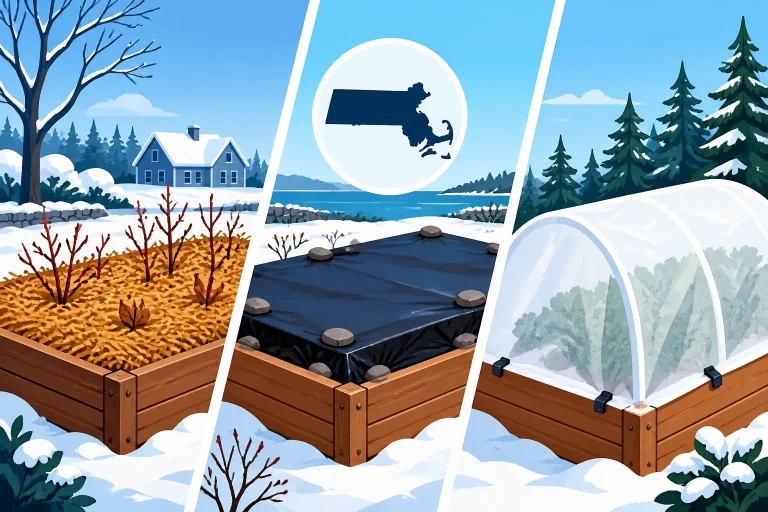
Keep protection ready before a cold night. Row covers, frost blankets, or other suitable fabric covers can help protect plants from a brief cold event when installed appropriately. The covering needs to reach the area that requires protection, and it should be secured so it does not blow away. A cover’s effectiveness depends on the material, setup, weather, and plant; it should not be treated as a substitute for checking the forecast. Covering Bedding Plants with Sheets When Frost Is Predicted and Row Covers to Protect Chilled Seedlings During Snaps discuss practical covering considerations.
Be careful with warm spells. After an unusually warm period, plants may have started active growth. Don’t assume that recent warmth has removed the risk of cold returning. If tender plants are already outside, monitor the forecast and protect them when conditions warrant. The same caution applies to plants that are already in the ground: an established root system does not prevent new leaves or flowers from being damaged.
Give container plants extra attention. Pots and planters can be moved more easily than in-ground beds, which can be useful when cold weather is forecast. But a container’s position can still expose it to cold wind, and the growing medium may cool quickly. Move sensitive containers to a more sheltered place when practical, and avoid relying on a porch or wall as a guarantee of safety.
Do not overreact to every cool night. A chilly forecast is not automatically a damaging freeze. The expected low, duration of cold, wind, cloud cover, plant type, and planting stage all affect the outcome. Use local forecasts and alerts, and make the protection decision based on the plant’s needs rather than the zone label alone.
Keep protection safe and suitable. Covers should not press heavily on tender growth, and plants need appropriate ventilation when conditions warm. A cover that stays in place through a sunny day may create heat stress, particularly over a small protected area. Check covered plants and remove or vent protection as appropriate for the material and conditions. Venting Row Covers on Sunny Days to Prevent Crop Heat Stress explains why daytime management matters.
Finally, treat a damaged plant according to what you observe rather than assuming it is lost. Cold injury can vary across a plant: exposed leaves may be affected while stems or roots remain viable. Avoid making an immediate decision based only on limp or discolored foliage. Give the plant time to show whether new growth will emerge, and compare the damage with the plant’s known cold tolerance. For crops that are unlikely to recover or mature in time, replacing them may be more practical than waiting.
Frequently Asked Questions
Does a warmer USDA zone mean the last spring frost will come earlier?
Not necessarily. A hardiness zone describes a long-term pattern in annual extreme minimum winter temperatures. It does not predict the timing of the last spring frost in a particular year. Use regional frost information and current forecasts when deciding when to plant.
Can a plant suited to my zone still be damaged by a cold snap?
Yes. Zone suitability is a broad guide to winter survival, not a guarantee against short-term cold damage. Newly emerging growth, flowers, and seedlings can be vulnerable even when an established perennial is suitable for the area.
Should I plant tender vegetables as soon as the weather turns warm?
A warm spell alone is not a reliable signal. Consider the crop’s cold tolerance, soil conditions, planting stage, local frost information, and the forecast. You can also wait for a more suitable window or keep plants protected while risk remains.
Are frost dates exact for every Massachusetts garden?
No. Frost estimates are based on records from particular stations and represent probabilities, not fixed dates. Local terrain, exposure, and other site conditions can make a garden warmer or colder than a nearby station suggests.
Disclaimer
This article is for general informational purposes only and does not constitute professional advice. Laws, prices and regulations vary by location and change over time. Consult a qualified professional for guidance on your specific situation. Massachusetts Gardening Guide is not a government agency and is not affiliated with any university extension, state department of agriculture or other government agency.