Plant Hardiness Zones Across Central and Northeastern Massachusetts
Hardiness zones can make plant labels seem more precise than they are, especially in central and northeastern Massachusetts, where nearby gardens may have different exposures and winter conditions. A zone is useful for screening plants for cold tolerance, but it cannot tell you when to sow vegetables or whether a particular spot will protect a tender shrub. Here’s how to use the map without treating it as a planting calendar.
What a hardiness zone tells you
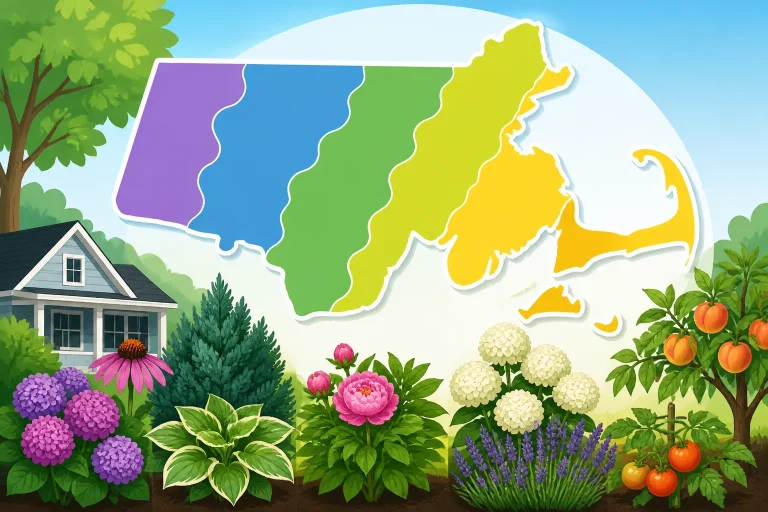
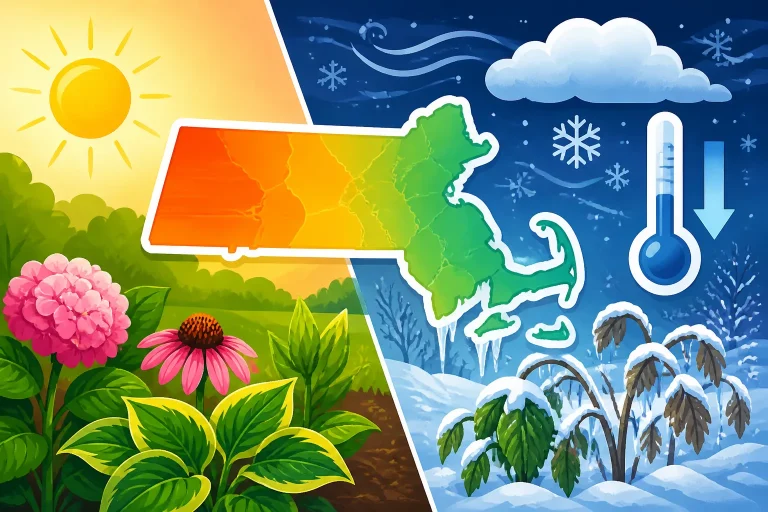
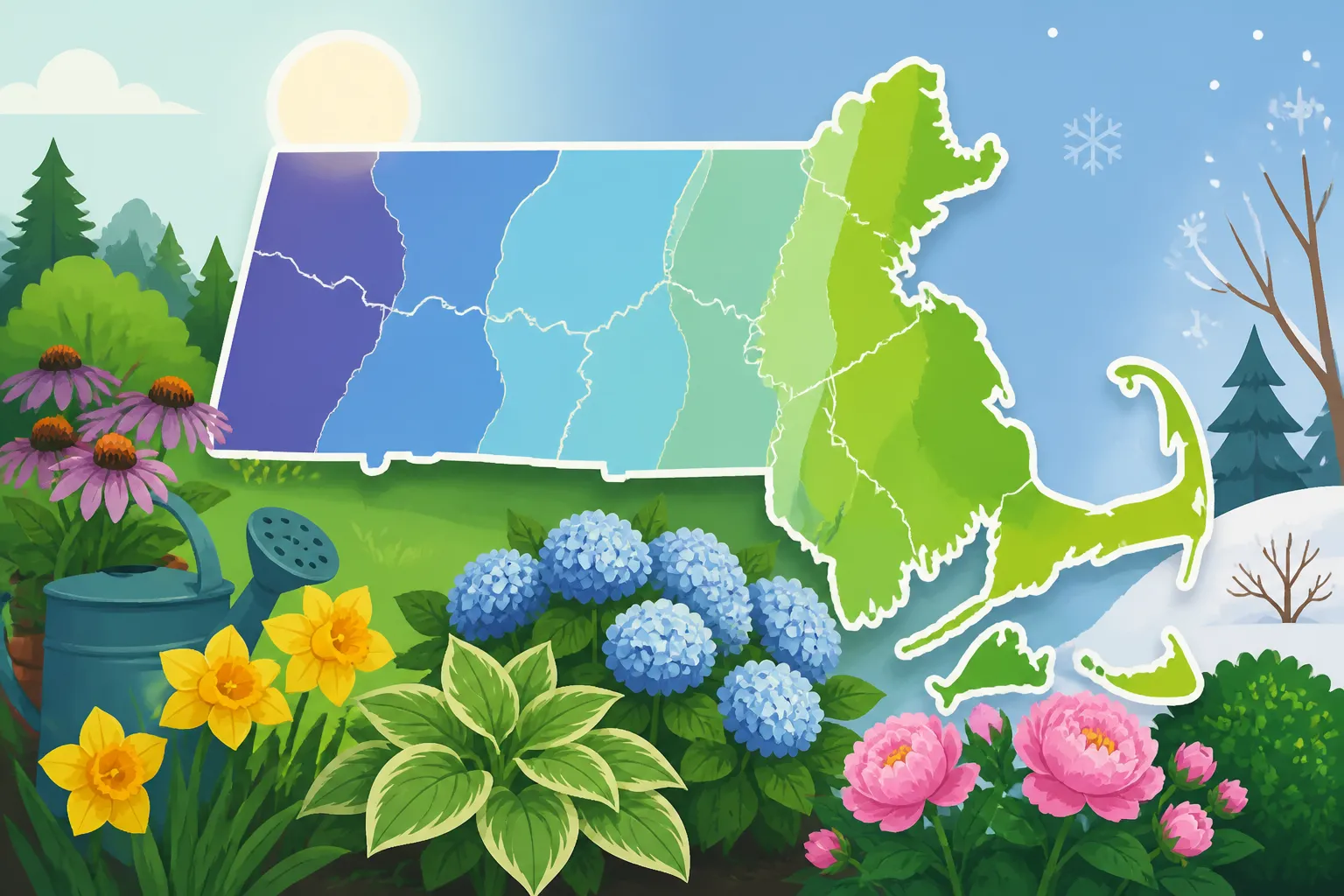
The USDA Plant Hardiness Zone Map groups locations by their average annual extreme minimum winter temperature. A zone covers a temperature range, and its “a” and “b” half-zones distinguish smaller steps within that range. Massachusetts falls across zones 5b to 7b on the map, but that statewide span is not a shortcut to identifying the zone for every community or garden.
A hardiness zone is mainly a way to compare how well perennial plants may tolerate winter cold. It can help you assess whether a shrub, tree, perennial, or other long-lived plant is a reasonable candidate for a location. If a nursery label gives a range of zones, compare that range with the map for your area, then consider the conditions in the exact spot where you plan to plant.
It does not describe every aspect of local weather. In particular, a hardiness zone does not tell you:
- When the last spring freeze is likely to occur
- When the first autumn freeze is likely to occur
- How long the growing season will be
- How much snow, wind, rain, or summer heat a plant will experience
- Whether soil is wet, dry, compacted, or slow to warm
- How much protection a plant will get from buildings, trees, slopes, or walls
That distinction matters for annual vegetables and other frost-sensitive crops. A vegetable may be suitable for the winter hardiness zone but still need warm soil and a low risk of spring frost before it can grow well outdoors. Conversely, a perennial labeled for a colder zone may survive winter but still perform poorly in a wet, exposed, or shaded location.
For more detail on the map’s local variation, see Massachusetts Hardiness Zones 5b to 7b: What Your Town Gets and Why Zone 6b Dominates Massachusetts ZIP Codes on the New Map. If you are checking an address or ZIP code, keep in mind that a map result is a regional estimate, not a guarantee about the temperature of an individual planting bed.
Why central and northeastern Massachusetts can vary from yard to yard
Central and northeastern Massachusetts are not uniform growing environments. The map provides a helpful regional overview, but local factors can make a garden feel warmer, colder, windier, or wetter than a nearby mapped area. Even within one property, an exposed corner and a sheltered bed beside a building can have different winter conditions.
Elevation and slope are part of the picture. Cold air tends to settle in low spots on calm nights, while a slope may allow cold air to drain downhill. A site’s direction and exposure also affect how much sun and wind it receives. A sunny, sheltered planting area may avoid some stresses that affect a nearby open site, though it can also warm earlier in spring and expose plants to temperature swings.
Buildings, paved surfaces, fences, and large trees create additional differences. A wall that receives sun can hold warmth, while the opposite side of a building may be shaded and exposed to cold winds. Trees may buffer wind but also compete with new plantings for water and light. These effects can influence plant performance without changing the official zone shown on the map.
Soil and water conditions matter as well. A plant that is winter-hardy may struggle if its roots sit in saturated soil, or if the soil dries out during a stressful period. A low, damp spot can expose roots and crowns to conditions that a plant label does not capture. On the other hand, a well-drained bed can still be difficult for plants if it is very exposed or dries quickly.
These differences are why a zone should be treated as a starting point rather than a verdict. To understand how small-scale conditions can differ from regional records, read Why Microclimates Differ from Weather Station Freeze Records and When a Single ZIP Code Spans Different Microclimates. Those distinctions are especially useful when a map result seems inconsistent with what you observe in your own yard.
A simple site check can help you interpret the map:
- Note whether the spot is exposed to wind or sheltered by structures and vegetation.
- Look for low areas where cold air or water may collect.
- Observe how much direct sun the site receives and whether that changes through the seasons.
- Check whether the soil drains after rain and whether it dries quickly.
- Compare plant performance across different parts of the yard over time.
This is not a substitute for the map. It is a way to pair a broad regional estimate with the conditions that actually affect a plant’s roots, stems, and buds.
How to use zones when choosing plants
Start with the plant’s stated hardiness range, then compare it with the zone shown for your area. If the listed range includes your map zone, the plant may be worth considering for winter survival. That does not guarantee success: the range generally speaks to cold tolerance, not whether the plant suits your soil, sunlight, moisture, wind exposure, or available space.
A plant near the edge of its listed range may need a more favorable location than one comfortably within it. Consider how exposed the site is, whether the plant’s roots will have suitable drainage, and whether winter winds or temperature fluctuations could cause added stress. If you are choosing a valuable or long-lived plant, it can be sensible to look for options rated for colder conditions than the map suggests for the immediate area, particularly for a site that is open or difficult to protect.
The reverse can also be true: a sheltered area may support a plant that is marginal for the broader mapped area. But don’t rely on a warm pocket alone if the plant is costly, difficult to replace, or vulnerable to sudden cold. A sheltered wall can moderate conditions, yet it may also encourage early growth that is exposed to a later cold snap.
Use zones differently for different kinds of plants:
| Planting decision | What the hardiness zone helps with | What else to check |
|---|---|---|
| Perennial flowers | Whether winter cold may be within a plant’s tolerance | Sun, soil moisture, drainage, and exposure |
| Shrubs and trees | Whether the plant is a plausible candidate for long-term survival | Mature size, soil, wind, and site space |
| Annual vegetables | Limited help with winter survival for plants grown for one season | Frost risk, soil temperature, crop maturity, and planting method |
| Container plants | A rough indication of the plant’s cold tolerance | Pot exposure, root protection, and winter storage options |
| Plants in a sheltered bed | A useful regional baseline | Whether the shelter is reliable during severe cold and wind |
For plants that stay outdoors year-round, don’t judge suitability by the hardiness number alone. A plant may be cold-tolerant but poorly suited to the planting site’s moisture or light. Check its basic growing requirements before buying, and consider whether those needs match the location throughout the season.
For vegetable gardeners, the zone is even less of a calendar. It does not say when you can safely transplant tomatoes, peppers, or other warm-season crops. It also does not identify the right sowing window for cool-season crops. The planting schedule depends on crop type, local frost risk, soil conditions, and whether you are sowing seeds directly or setting out indoor-grown seedlings. See Massachusetts Vegetable Planting Guide: Schedules by Region for the broader scheduling picture.
Keep hardiness zones separate from frost dates and planting schedules
A common mistake is to treat a hardiness zone as if it predicts the date of the last spring frost or first autumn frost. It does not. Those dates describe a different kind of risk and vary across Massachusetts. They also vary from year to year, so a calendar date cannot promise that a freeze will or will not happen.
For a vegetable bed, the distinction is practical. A crop may be able to tolerate a cool night but still need warmer soil to germinate or establish. Another crop may tolerate light frost once it is growing but be vulnerable as a young seedling. For a perennial, the relevant question may be winter survival, while for a spring planting, the immediate concern may be a late freeze or cold, wet soil.
Before making a seasonal plan, use a regional planting schedule and freeze information rather than converting a hardiness zone into a date. Why Massachusetts Has No Single Statewide Frost Date explains why local timing varies, while Massachusetts Frost Dates and Freeze Probabilities: A Station Guide can help you understand what station-based freeze estimates do and do not mean. A probability date is a planning reference, not a fixed annual event.
For warm-season vegetables, local soil conditions and crop needs are important alongside frost risk. A seed packet or planting guide may indicate that a crop prefers warm soil, but the zone does not tell you when your particular bed reaches that condition. For seedlings started indoors, gradual hardening off and a suitable outdoor window matter too. See Massachusetts Sowing Windows for Cool and Warm Season Vegetables and Hardening Off Indoor Seedlings Before Spring Garden Transplanting for the crop-specific decisions.
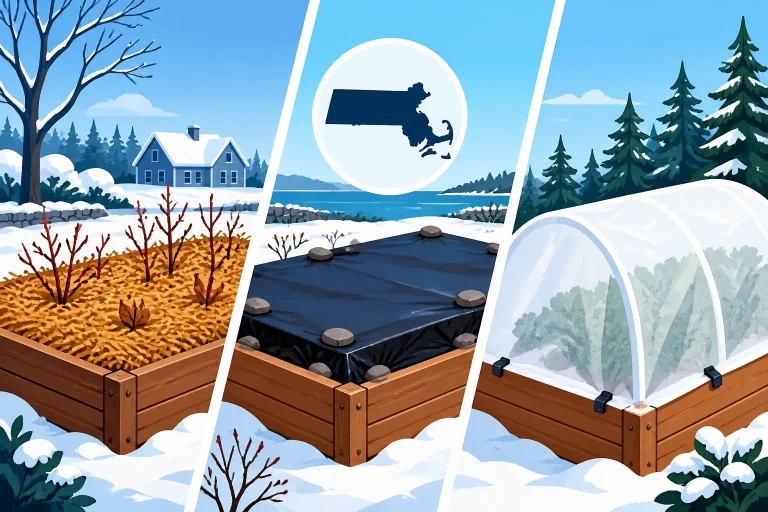
The same principle applies in autumn. A zone does not tell you how much time remains for a late crop to mature, nor when to cover plants before a cold night. Use seasonal forecasts and crop-specific maturity needs, and be prepared to adjust as weather changes. Massachusetts Fall Vegetable Gardening: Late Crops and Frost Covers covers how frost protection fits into late-season planning.
A practical way to read the map for your garden
When you look up a location, begin with the map’s result as a broad winter-cold reference. Avoid assuming that a ZIP code identifies one exact growing condition. Larger areas can cross different microclimates, and a neighborhood-level map estimate does not measure shade, wind, slope, or soil drainage at a particular house.
Next, identify what you are trying to decide. If you are choosing a tree or perennial, the hardiness range is relevant, but you should also check the plant’s site requirements. If you are planning vegetables, use a planting calendar and freeze information instead. If you are trying to protect an established plant, observe what part of the plant is exposed and whether the site is unusually windy, damp, or shaded.
For an existing garden, keep notes rather than relying on one season’s result. Record where plants leaf out early, where frost lingers, where puddles remain after rain, and which areas are most exposed to wind. Notes from several seasons can reveal patterns that a broad map cannot show. If a plant struggles, consider the full set of possible causes before concluding that its zone is wrong. Poor drainage, pests, disease, light levels, or planting stress may be responsible.
For a new garden, choose plants with a margin of tolerance where conditions are uncertain. A plant suited to the map zone and the site’s soil and light is generally a more reliable choice than one that barely fits the zone but has demanding moisture or exposure needs. If you want to experiment with a borderline plant, start with one in a more protected location rather than making it the centerpiece of a large planting.
Use the map as one part of a decision process:
- Check the mapped zone. Treat it as a regional estimate of winter minimums.
- Read the plant’s hardiness range. Confirm that the plant is not obviously mismatched to the area.
- Assess the site. Consider drainage, sun, wind, slope, and nearby structures.
- Use the right seasonal information. For vegetables and spring planting, consult frost probabilities and crop-specific schedules.
- Adjust based on observation. Keep track of what happens in the garden and refine future choices.
If you want to compare a map result with a community-level interpretation, Finding Your Massachusetts Hardiness Zone by ZIP Code offers a related starting point. For more on differences between regions, see Massachusetts Planting Differences: East and South vs West. Neither replaces looking at the actual site, but both can help put a local result in context.
Frequently Asked Questions
Does a hardiness zone tell me when to plant vegetables?
No. It indicates a broad pattern of winter cold, not a spring planting date. Use frost probabilities, soil conditions, and crop-specific guidance to plan vegetable sowing and transplanting.
Can two gardens in the same ZIP code have different conditions?
Yes. A ZIP code can cover varied terrain and exposures, and individual gardens may differ in shade, wind, drainage, and cold-air movement. The map is not a measurement of each property.
If a plant is rated for my zone, will it definitely survive?
No. The rating is a useful screen for winter cold tolerance, not a guarantee. Soil drainage, exposure, moisture, plant health, and other conditions can affect survival.
Should I choose plants for a warmer or colder zone than my map result?
Use the plant’s stated range as a starting point. For an exposed or uncertain site, a plant with a margin for colder conditions may be a lower-risk choice. A sheltered spot may support a more marginal plant, but it does not remove the possibility of damaging cold.
Disclaimer
This article is for general informational purposes only and does not constitute professional advice. Laws, prices and regulations vary by location and change over time. Consult a qualified professional for guidance on your specific situation. Massachusetts Gardening Guide is not a government agency and is not affiliated with any university extension, state department of agriculture or other government agency.