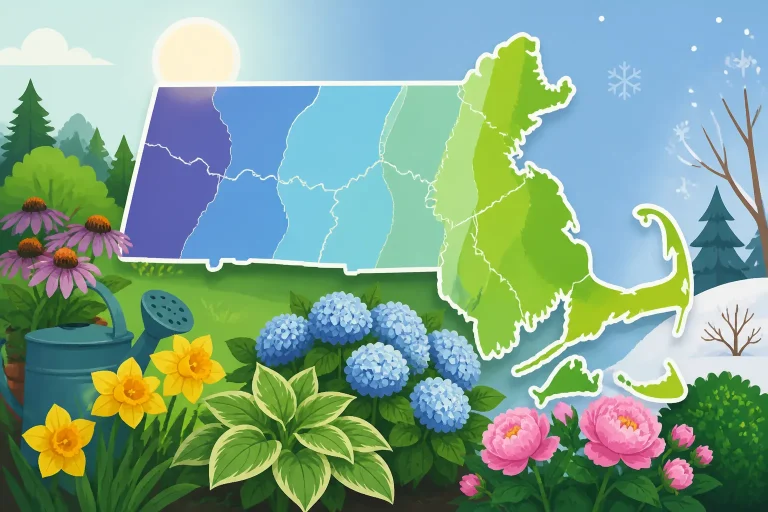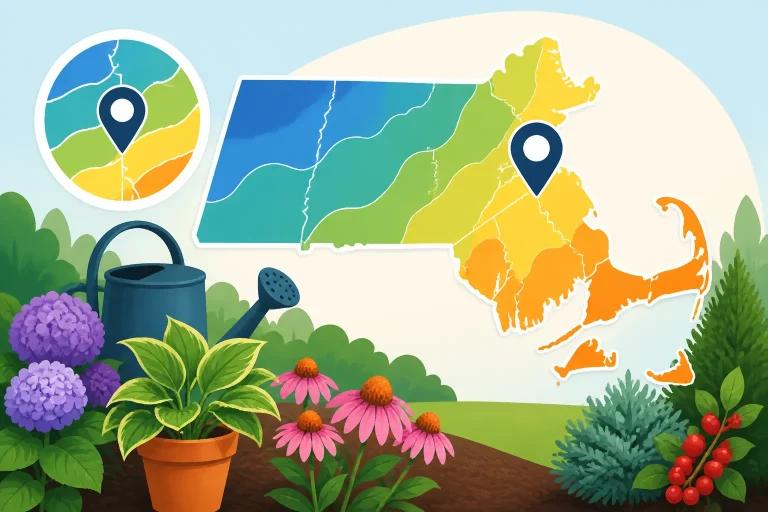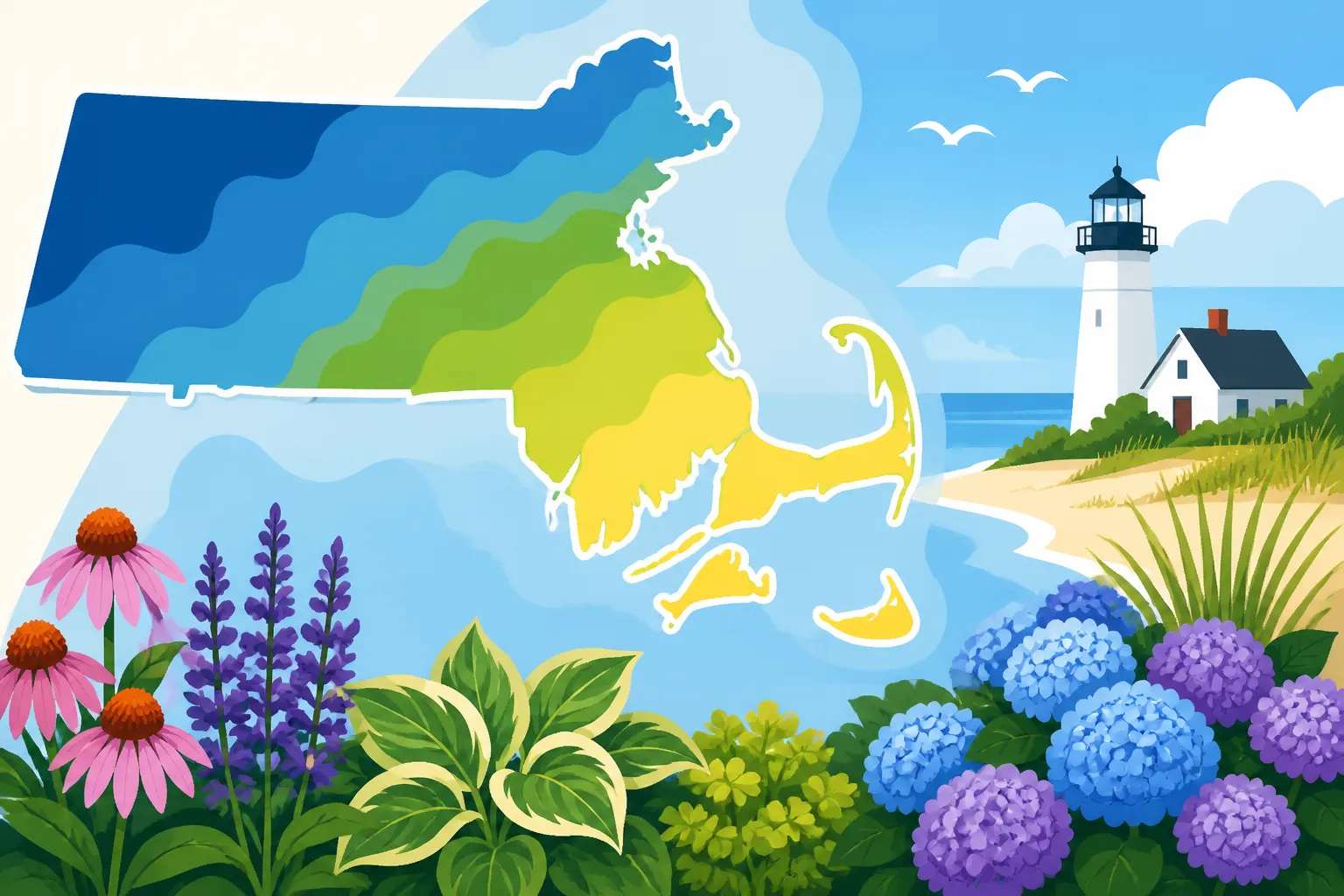
Hardiness Zones of Cape Cod and Coastal Massachusetts
Cape Cod and coastal Massachusetts do not behave like a single garden site, even when nearby places share a hardiness zone. A zone can help you compare plants’ winter cold tolerance, but it cannot predict every garden’s conditions. Here’s how to use the map carefully, account for coastal exposure, and choose plants with your own yard in mind.
What a hardiness zone tells you—and what it leaves out
A plant hardiness zone is a way to compare locations by their typical winter cold. The USDA Plant Hardiness Zone Map is useful when a plant label or catalog describes a plant’s cold tolerance by zone. If your location falls within the range given for a plant, that suggests the plant may tolerate the area’s winter minimums.
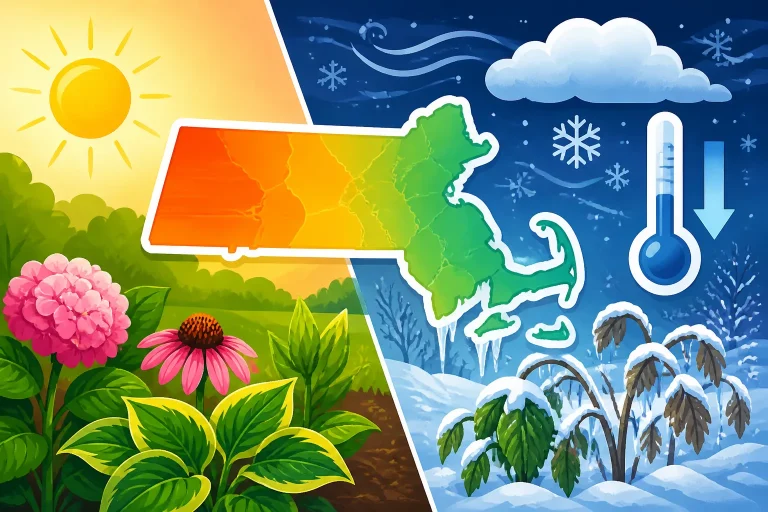
That is a starting point, not a promise. A zone does not say whether a particular plant will thrive in your yard, how quickly spring will arrive, or whether a late cold snap will damage new growth. It also does not account for all the differences between an exposed coastal garden, a sheltered courtyard, and a low spot where cold air gathers.
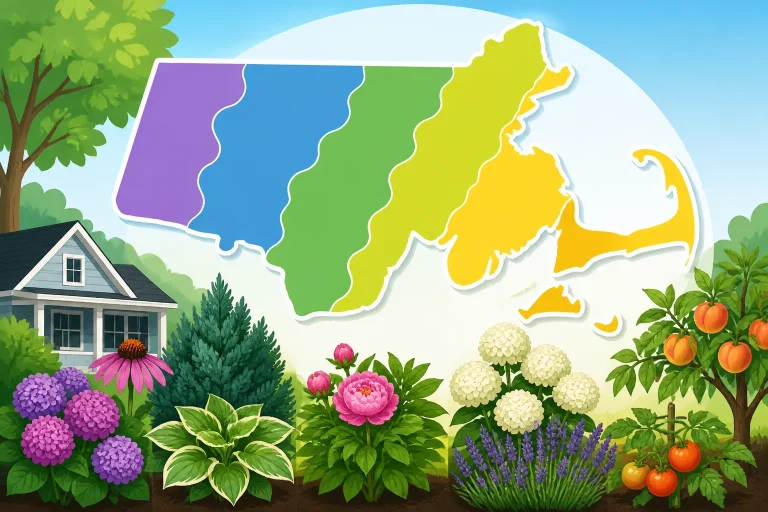
The map’s scale can make the result look more exact than it is. A ZIP code can include different exposures and local conditions, so it is better to treat a ZIP-code result as a useful regional clue than as a measurement of your exact planting bed. Finding Your Massachusetts Hardiness Zone by ZIP Code can help you understand how to use a location-based result without assuming it describes every corner of a property.
It also helps to separate hardiness zones from frost dates. A hardiness zone is about typical winter cold; a frost date is an estimate based on freeze records and probability. Neither tells you the exact day it is safe to plant tender vegetables or flowers outdoors. Massachusetts has varied conditions across the state, which is why Why Massachusetts Has No Single Statewide Frost Date is useful context when you are planning a garden schedule.
| Information | What it helps you judge | What it does not tell you |
|---|---|---|
| Hardiness zone | Whether a plant may tolerate typical winter cold in a region | Whether it will thrive in a specific yard or survive every unusual cold event |
| Frost-date information | The likelihood of freezing conditions around a local weather station | The conditions at every garden or the exact date of the final frost |
| Your site conditions | How wind, sun, drainage, and shelter affect a planting spot | Whether a plant is suited to every other spot on the property |
For Cape Cod and other coastal parts of Massachusetts, the practical question is not only “Which zone does this place fall in?” It is also “What happens at the spot where I plan to plant?” A plant may handle winter cold but still struggle with wind, salt exposure, poor drainage, dry soil, or a sudden temperature swing.
This distinction matters especially when choosing long-lived plants. A perennial that survives several winters but declines in a windy, exposed bed may be a poor fit, even if its hardiness range appears suitable. Likewise, an ornamental shrub sheltered by a building may experience different conditions from the same kind of shrub planted in an open yard.
A zone is most useful as an initial filter. Check the plant’s cold tolerance, then consider the conditions it needs to grow well. If those needs do not match your site, choosing a different plant or a more suitable location is usually more reliable than relying on the zone alone.
Why coastal sites can differ over short distances
Coastal influence can shape garden conditions, but it does not make every coastal location alike. Open exposure, nearby buildings, vegetation, slope, and the distance from the water all affect the conditions a plant experiences. Even within one property, a protected corner can feel different from a bed that receives direct wind.
A sheltered site near a building or dense planting may avoid some wind exposure. An open bed may be more exposed to wind and salt carried from the coast. A low area may collect cold air, while a raised or sloped spot may drain differently. These contrasts are reasons to observe the actual planting area rather than assume that the whole Cape or shoreline shares one garden climate.
Wind deserves particular attention for plants that keep foliage through winter. Cold, drying winds can stress leaves and stems, especially when the soil is frozen or moisture is limited. A plant that is hardy enough for a region can still show winter injury where it is exposed. When choosing an evergreen or a wind-sensitive shrub, consider a site with shelter as well as the plant’s stated cold tolerance. Protecting Tender Massachusetts Evergreens from Winter Desiccation offers more detail on that issue.
Salt exposure is another separate consideration. Hardiness-zone ratings do not tell you whether a plant tolerates salt spray or salty runoff. If a bed is close to an exposed shoreline, or near a route where salty water may reach the soil, look for plants suited to the actual exposure and avoid assuming that winter hardiness covers salt tolerance. For a broader discussion of coastal plant selection, see Hardiness Zones of Cape Cod and Coastal Massachusetts—but if you are reading this article, focus on how the map result fits your particular site rather than treating the coast as one uniform growing area.
Drainage and moisture also change from bed to bed. A site that stays wet after rain may be unsuitable for a plant that needs well-drained soil, regardless of its cold tolerance. Sandy or fast-draining soil may dry more quickly, while compacted or low-lying ground may remain damp. Before choosing plants, notice how water moves through the area and whether the soil stays wet or dries rapidly.
A quick site assessment can help you sort out these differences:
- Exposure: Is the planting area open to wind, or does a building, fence, or established planting provide shelter?
- Sun and shade: How much direct sunlight reaches the bed, and does that change during the growing season?
- Drainage: Does water soak in, run off, or remain in the area after rain?
- Salt: Is the location exposed to coastal spray or runoff that could carry salt?
- Cold-air patterns: Is the bed in a low pocket, or does it sit on a slope where cold air can move away?
- Winter cover: Are young plants exposed to browsing animals or sheltered by vegetation that may also provide cover for them?
These observations do not replace a hardiness-zone result. They help you decide whether the plant’s needs match your yard. If two planting spots have noticeably different exposure or drainage, assess them separately instead of applying one zone-based decision to both.
A garden journal can make this easier. Note which beds dry quickly, where winter winds are strongest, and which areas remain sheltered. Record plant survival and damage from one season to the next. Those observations are specific to your property, which makes them more useful for future planting than a broad regional label alone.
How to check your location without overreading the result
Start with a location-specific result on the USDA Plant Hardiness Zone Map, using your town or ZIP code as a point of reference. Then treat the result as an approximate regional classification, not a guarantee for an individual address. If you are close to a boundary or your ZIP code covers varied terrain, compare the map result with the actual conditions around your home.
For a closer look at regional variation, Massachusetts Hardiness Zones 5b to 7b: What Your Town Gets discusses how zone patterns can vary across the state. The important takeaway for a coastal gardener is not to transfer a result from another town to a specific bed without checking local exposure. A nearby location can be a helpful comparison, but it does not prove your yard has identical conditions.
Do not use a hardiness zone as a substitute for a planting calendar. It cannot tell you when to sow peas, move tomato seedlings outdoors, or plant a heat-loving crop. Those decisions depend on factors such as soil warmth, frost risk, the crop’s needs, and the weather pattern in your area. For seasonal planning, compare the zone information with Massachusetts Vegetable Planting Guide: Schedules by Region and Massachusetts Planting Calendar: From Spring Thaw to Fall Freeze.
The zone can still be valuable when you are deciding whether to include a plant in the first place. Use it to screen for cold tolerance, then check the plant’s other needs: light, moisture, soil conditions, salt tolerance, and wind exposure. If a label gives a range, do not assume that being within the range means every site is equally suitable.
When a plant’s range appears close to your location, think about the consequences of a difficult winter. A plant that is central to a landscape plan or costly to replace may call for more caution than a small trial planting. You might choose a more sheltered spot, select a plant with a broader margin of cold tolerance, or test it in a less prominent bed before expanding the planting.
Also consider the plant’s role. A short-lived annual does not need to survive the winter, so its hardiness zone is less relevant than its growing-season needs. A perennial, shrub, or tree must withstand winter conditions over multiple seasons, making cold tolerance more important. For a tree, the site’s wind exposure, drainage, available space, and protection from damage matter alongside winter hardiness.
A useful decision sequence is:
- Check the plant’s stated cold tolerance. Use the zone information as an initial filter.
- Assess the planting site. Note wind, sun, drainage, salt exposure, and shelter.
- Check seasonal timing separately. Use regional planting guidance and local frost information rather than treating the zone as a calendar.
- Choose a suitable position. A more sheltered or better-drained spot may make a meaningful difference.
- Monitor the plant. Watch for winter injury, poor growth, or stress and adjust care or location as needed.
A map result is not a substitute for observing the yard over time. A plant may establish well in a mild winter and then face a more difficult season later. Conversely, winter damage does not always mean a plant was inherently unsuitable; wind, water, salt, or a sudden temperature change may also have contributed. Looking at the pattern of damage can help distinguish a site problem from a poor plant choice.
When frost timing is the concern, use station-based information cautiously. Frost probabilities describe patterns, not fixed dates for each garden. Local cold pockets and exposure can shift conditions around a property. Massachusetts Frost Dates and Freeze Probabilities: A Station Guide explains why the nearest weather station can be useful without representing every yard exactly.
Choosing plants and protecting them in coastal gardens
Once you have a zone result and a sense of the site, use both to narrow your choices. Start with plants whose cold tolerance is compatible with the location. Then look for plants suited to the bed’s exposure and soil. A plant that needs shelter, steady moisture, or protection from salt may be a poor choice for a dry, open, wind-exposed spot even if it can tolerate the regional winter cold.
For new landscape plantings, avoid putting every plant in the most exposed part of the yard. Group plants according to their needs, and use existing shelter where it makes sense. A sheltered bed can be a better place to trial a plant with marginal cold tolerance, while the most exposed areas are better reserved for plants suited to those conditions. This is not a guarantee against winter damage; it is a way to match the plant to the conditions it will face.
For trees, the planting site needs attention beyond the zone. Consider available room, soil drainage, wind exposure, and the conditions around the trunk. Young trees can be vulnerable to injury from animals using nearby vegetation for cover. According to the University of Massachusetts Amherst, cut tall grass and other vegetation short within 2 feet of young trees in late fall to reduce cover for mice and voles. This is a practical detail that zone maps do not show, but it can matter for a newly planted tree.
For perennials and shrubs, consider how the plant handles winter exposure and whether the bed drains well. Avoid placing a plant that prefers shelter in a spot directly exposed to coastal winds just because the regional zone seems suitable. If you are unsure, trial a small number of plants first and watch how they respond through the seasons. That approach can reduce the risk of repeating a poor planting choice across a large bed.
Vegetable gardeners should keep hardiness zones separate from crop timing. A zone does not determine the best date to sow a vegetable seed or transplant a start. Cool-season crops and heat-loving crops have different needs, and outdoor planting decisions also depend on frost risk and soil conditions. Use a crop-specific schedule for those choices, and consider Massachusetts Sowing Windows for Cool and Warm Season Vegetables when you are planning a sequence of plantings.
For tender starts, the date on the calendar alone is not enough. A seedling raised indoors may need gradual adjustment to outdoor conditions before planting, and a warm-season crop may be damaged by cold soil or a sudden chill. Hardening Off Indoor Seedlings Before Spring Garden Transplanting covers the transition from indoor growing to outdoor conditions. The zone can help with long-term plant selection, but it does not replace those practical steps.
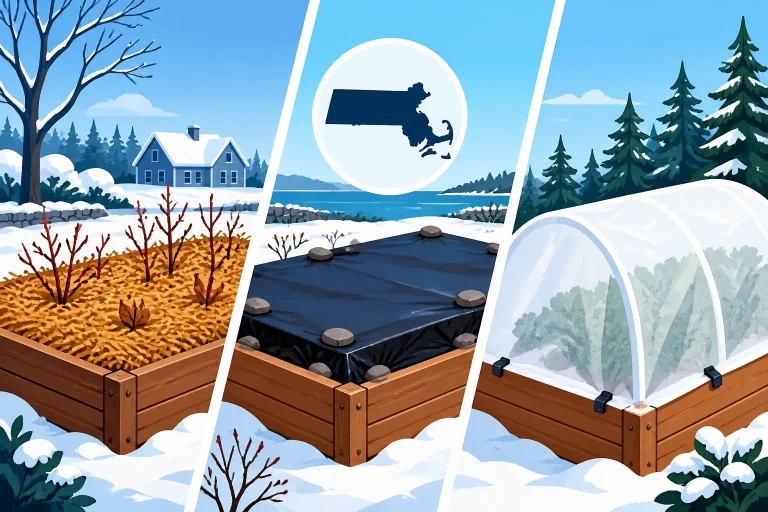
Container gardeners face another distinction: plants in pots are more exposed to temperature swings than plants rooted in the ground. A hardiness rating generally describes a plant’s cold tolerance, not the conditions of a particular container. Container size, placement, wind exposure, and winter protection can all affect the roots. If you plan to keep a perennial or shrub in a pot, evaluate the container’s winter exposure as carefully as the plant label.
Keep notes when a plant struggles. Did it suffer after a cold spell, or did it show stress during a dry period? Was the damage on the windward side? Did the soil remain wet? Those clues help you decide whether to change the location, improve the growing conditions, or choose a different plant. Without those observations, it is easy to blame the zone for problems caused by something else.
The most dependable approach for Cape Cod and coastal Massachusetts is to combine a map result with local observation. Use the zone to judge broad winter cold tolerance, then assess the garden’s wind, salt exposure, moisture, and shelter. Use frost guidance and crop-specific calendars for planting dates. No single label can answer every one of those questions, but together they provide a practical basis for choosing plants that fit the site.
Frequently Asked Questions
Does Cape Cod have one hardiness zone?
Do not assume that the whole Cape has one zone or that a regional result describes every garden. Check a location-specific map result, then consider how your property’s exposure and terrain affect the planting site.
Can a plant within my zone still die over winter?
Yes. A zone is a guide to typical winter cold, not a guarantee of survival. Wind, wet soil, salt exposure, abrupt cold, and other site conditions can contribute to winter damage.
Does a hardiness zone tell me when to plant vegetables?
No. Use a regional planting calendar, crop-specific guidance, and local frost information to plan sowing and transplanting. A zone helps with cold tolerance, not the exact timing of seasonal garden work.
Should I use my ZIP code as my garden’s exact zone?
Use it as a useful starting point rather than an exact description of your bed. Conditions can vary within a ZIP code and across a property, so compare the result with the location and exposure of the planting area.
Sources
- University of Massachusetts Amherst — Hort Notes 2023 Vol. 34: 10: Center for Agriculture, Food, and the Environment (CAFE) at UMass Amherst (checked November 15, 2026)
Disclaimer
This article is for general informational purposes only and does not constitute professional advice. Laws, prices and regulations vary by location and change over time. Consult a qualified professional for guidance on your specific situation. Massachusetts Gardening Guide is not a government agency and is not affiliated with any university extension, state department of agriculture or other government agency.