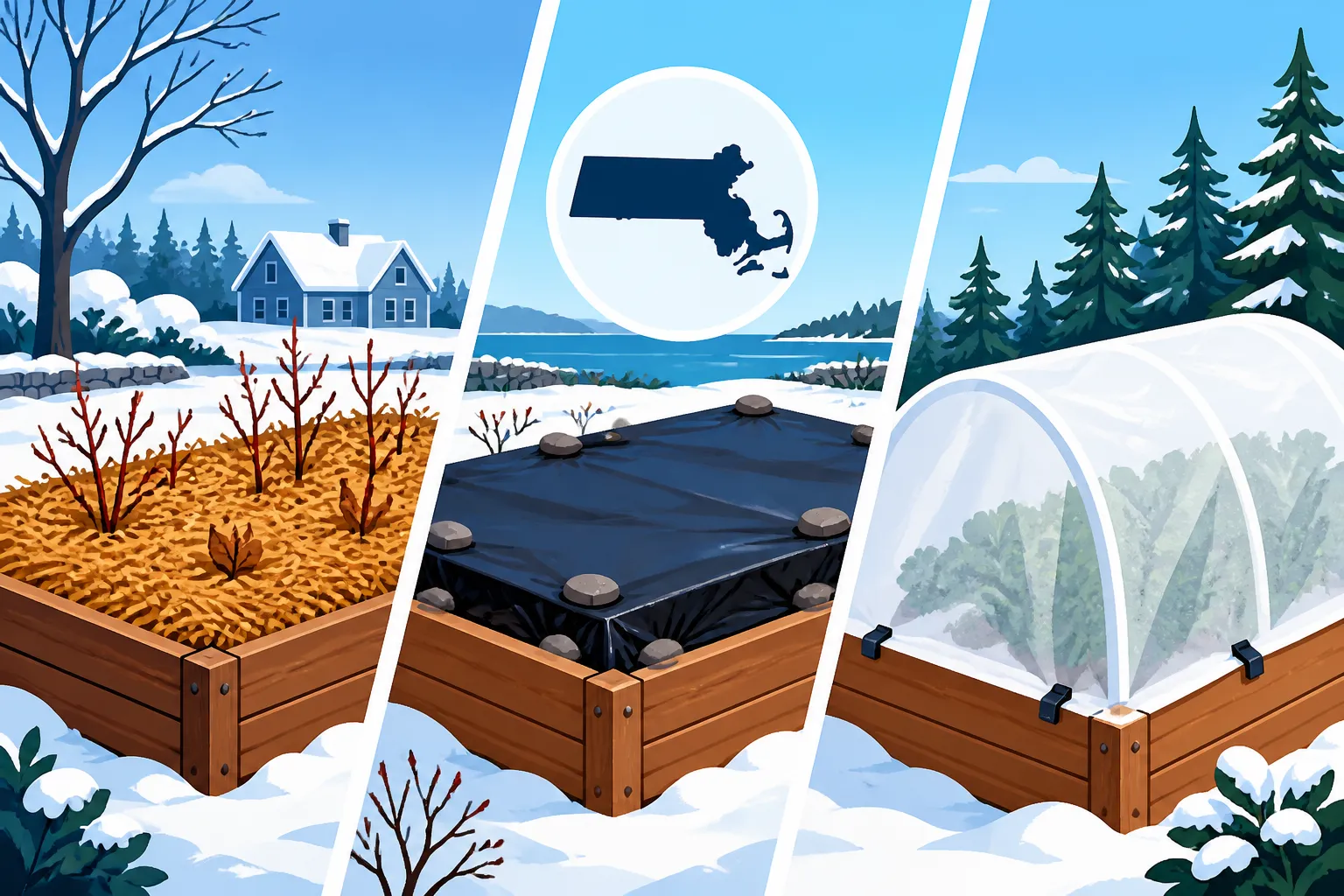
Winter Protection for Raised Beds: Mulch, Plastic, or Cover
A Massachusetts raised bed can freeze, thaw, and collect winter rain and snow, leaving its soil exposed or difficult to work when spring arrives. The best protection depends on whether you want to preserve the soil, suppress weeds, or get an earlier start on planting. Here’s how mulch, plastic, and covers compare—and how to choose and use them without creating new problems.
Why protect a raised bed through winter
Raised beds offer useful access and drainage, but their exposed sides and open tops also make winter conditions matter. Wind can dry out uncovered soil, while repeated wetting and freezing can leave a surface crusted or uneven. A protective layer can reduce exposure, limit weed growth, and make spring bed preparation easier.
Winter protection is not the same as trying to keep a bed warm enough for summer crops. Most protective materials are meant to shield the soil, not create a dependable growing environment through winter. A lightweight cover, for example, can reduce exposure to wind and rain, but it does not turn an outdoor bed into a heated space. If the goal is to keep harvesting after cold weather arrives, consider the different approach described in Extending Massachusetts Fall Harvests with Cold Protection Covers.
Start by asking what the bed needs. If the main concern is bare soil, a living cover crop or loose organic mulch may be a good fit. If weeds are the bigger issue, an opaque covering can block light. If you want to protect plants that are still growing, a breathable fabric cover or low tunnel may help, but it needs to be secured and monitored. These methods have different jobs; a material that works well for one may be inconvenient for another.
Raised-bed construction and soil condition also matter. A bed that already drains well may need little intervention beyond protecting the surface. If water pools or the soil remains saturated, putting an impermeable sheet over the bed could make the problem harder to notice. For help thinking through the bed itself, see Setting Up Raised Beds for Backyard Food Crops and Why Raised Garden Beds Fail to Drain: Common Setup Traps.
UMass Extension does not appear to give a separate winter-cover recommendation specifically for raised beds. Its general vegetable-garden advice can still help with decisions about open soil: According to University of Massachusetts Amherst, winter cover crops should be seeded by late September to mid-October. University of Massachusetts Amherst also says, for a quicker spring start, beds may be covered with black plastic mulch in fall.
Those are options, not a requirement to cover every bed in the same way. Your choice can take account of what is planted, how wet the bed gets, whether the cover can be kept in place, and how soon you want to prepare the soil again.
Compare mulch, plastic, and covers
The word “cover” can mean several different things. Loose mulch lies on the soil surface. Black plastic mulch is a sheet used to cover the soil. Fabric row cover usually sits over plants or supports. A tarp or other solid sheet can block rain and light, but it is not necessarily designed to serve as garden mulch. Knowing which job you need done makes the choice clearer.
| Option | Main use | What to watch for | Best fit |
|---|---|---|---|
| Living cover crop | Keeps soil covered with growing plants | Needs suitable timing and a plan for clearing or managing growth in spring | Beds that can be prepared for a cover crop |
| Loose organic mulch | Shields bare soil and can be moved aside when planting | Can become wet or compacted; may need clearing from planting areas | Beds that need a simple, flexible surface layer |
| Black plastic mulch | Blocks light and covers the soil surface | Can shed rain, catch wind, or make moisture harder to inspect | Beds where weed suppression or a quicker spring start is the priority |
| Breathable fabric cover | Protects plants and reduces exposure while allowing air and some moisture through | Must be secured; it may need adjustment as weather changes | Beds with plants still being grown or harvested |
| Tarp or solid sheet | Blocks light and can keep some precipitation off the bed | May trap moisture, shed water beyond the bed, or flap in wind | Short-term coverage when the bed and drainage can be monitored |
Living cover crops
A cover crop keeps the soil covered with living growth rather than a sheet or layer of mulch. It can be a good choice when the bed is empty and there is enough time for the plants to establish. It also avoids having to store and reuse a large piece of plastic.
A living cover crop is less convenient if you need to plant the bed as soon as spring conditions allow. You’ll need to decide how to manage the growth before planting, and the plants may take time to clear. For a comparison of cover-crop approaches, see When to Plant Fall Rye or Oat Cover Crops Before Heavy Freeze and Using Black Plastic or Oats Over Winter Raised Beds.
Loose organic mulch
Loose mulch, such as clean leaves or other suitable organic material, is easy to spread over exposed soil and move aside later. It can soften the effect of wind and precipitation on the soil surface. Because it does not form a continuous impermeable sheet, it is also less likely to redirect all surface water away from a planting area.
Its main drawback is spring cleanup. Material can become tangled with plant stems, settle into a wet layer, or be in the way when you want to sow or transplant. If you leave it in place, keep it from smothering any plants you intend to retain. If you plan to use it around vegetables later, make sure it is suitable for the bed and not contaminated with debris or unwanted plant material.
Black plastic mulch
Black plastic mulch blocks light from reaching the soil surface and can help make spring bed preparation quicker. It is a solid cover, so its main trade-off is that water and air do not move through it as they would through a loose mulch or breathable fabric. Depending on the bed and how the sheet is laid, rain may run off rather than soak into the soil.
Use plastic only when you can keep it secure and check what is happening beneath it. A loose sheet can flap, tear, or pull away in wind. If the bed has wet or poorly draining soil, an impermeable covering may make it harder to spot standing water or a persistent moisture problem. A cover also needs to be removed or repositioned when you are ready to inspect and prepare the soil.
Fabric covers and solid sheets
Breathable fabric row cover is usually chosen to protect plants, not simply to cover bare ground. It can be supported over plants or a frame, and its porosity allows more air and moisture through than a solid sheet. The practical challenge is securing it and checking that it has not shifted, sagged, or become damaged.
A tarp or other solid sheet can block light, but it is not automatically a better substitute for mulch. Its edges may collect wind, and water may drain off the bed rather than into it. If the sheet touches plants, holds moisture against them, or is left loose, it can cause problems rather than solve them. For broader fall protection options, see Massachusetts Fall Vegetable Gardening: Late Crops and Frost Covers and Using Cold Frames and Low Tunnels for Season Extension.
Choose the right approach for your bed
A useful choice begins with the condition of the bed, not with the material that seems most protective. Walk around the bed and check for exposed soil, loose boards, poor drainage, and plants you want to keep. Think about what you will want to do with the bed when spring returns.
If the bed is empty
For an empty bed, choose between a living cover crop, loose organic mulch, and an opaque sheet. A cover crop suits gardeners who want a living cover and can make room for it to grow. Loose mulch is a more flexible choice when you want to cover soil now but still be able to rake or move material aside later. Plastic can suit a bed where blocking light and simplifying spring preparation are priorities.
Consider how much spring work you are willing to do. A cover crop may need to be cleared or managed. Loose mulch may need to be moved from areas where you will plant. Plastic needs to be removed, stored, or repositioned, and the soil underneath should be checked before planting. There is no single option that avoids all follow-up.
If your planting schedule is part of the decision, compare it with Massachusetts Planting Calendar: From Spring Thaw to Fall Freeze and Massachusetts Vegetable Planting Guide: Schedules by Region. A winter cover is only one part of the seasonal plan; the bed should still be ready for the crop you intend to grow.
If vegetables are still growing
Do not cover active plants with material that will crush them or hold unwanted moisture against their leaves. A breathable fabric supported above the plants may be more suitable than a solid sheet laid directly on the bed. Even then, check whether the plants need access to air, light, and moisture, and make sure the fabric cannot be pulled loose by wind.
If the crop is nearly finished, harvesting it and then covering the newly bare soil may be simpler than trying to protect plants that are unlikely to keep producing. For crops that can continue into cooler conditions, the advice in Massachusetts Fall Vegetable Gardening: Late Crops and Frost Covers can help you think through protection while plants remain in the bed.
If the bed stays wet
Be cautious with solid plastic, a tarp, or any covering that sheds water. Water may collect at the edges, run into one spot, or remain trapped beneath the sheet. Before installing a cover, look for signs of poor drainage and address the bed’s condition rather than hiding it under a surface layer.
Loose mulch or a breathable fabric may be easier to monitor, though neither will fix waterlogged soil. If the bed drains poorly, first consider whether its location, construction, or soil mix is contributing. What to Fill Raised Garden Beds With: Soil Mixes and Budgets offers more background on bed materials.
If wind is the main concern
Any sheet or fabric cover needs to stay in place. Secure the edges in a way that does not damage the bed or create a trip hazard, and check the cover after windy or wet weather. A loose tarp can flap and tear; a lightweight fabric can lift; even plastic mulch can shift if it is not anchored well.
A heavier loose mulch may be less prone to blowing away, but do not assume that weight alone makes a cover suitable. Check that the material is clean, does not contain unwanted seeds or debris, and will be manageable when you need to plant.
If you want a quick spring start
A solid black plastic mulch may make bed preparation more convenient when spring arrives, but that convenience comes with less direct access to the soil while it is covered. Plan to lift the sheet and inspect the bed rather than assuming the soil beneath it is ready. Check whether it is damp, compacted, or uneven, then prepare the surface for the next crop.
If early sowing is the goal, the bed’s readiness still depends on local conditions. Use Massachusetts Sowing Windows for Cool and Warm Season Vegetables and Spring Vegetable Sowing and Transplanting by Regional Frost Dates to plan what can go in the bed when conditions permit.
How to prepare and cover a raised bed
A little preparation helps any winter covering work better. The main aim is to cover exposed soil without trapping problems, damaging plants you want to keep, or creating a difficult spring cleanup.
-
Decide what should remain. Harvest finished crops and remove plant material that is diseased or badly damaged. If plants are healthy and you want to keep them, choose a cover that can sit above them without crushing them.
-
Check the soil and drainage. Look for standing water, saturated areas, and places where runoff enters or leaves the bed. Avoid using an impermeable sheet to conceal a drainage problem. If you see a recurring issue, consider whether the bed needs repair or a change in its soil mix.
-
Clear weeds and unwanted debris. Remove weeds before covering the soil. A sheet may block light, but it does not make an established perennial weed or a mass of plant debris disappear. Clearing first also makes it easier to see the bed when you uncover it.
-
Choose a cover that matches the goal. Use a living cover crop if you want living growth over the soil and can manage it later. Choose loose mulch if you want flexible surface protection. Use black plastic when blocking light or supporting a quicker spring start matters more than access to the covered soil. Use breathable fabric when plants still need protection.
-
Lay the material with the bed in mind. Keep loose mulch from burying plants you intend to keep. Lay a solid sheet so it does not form pockets that collect water or channel runoff somewhere inconvenient. Support fabric above plants where needed rather than pressing it down onto foliage.
-
Secure the edges. Keep plastic and fabric from lifting in wind. Use an anchoring method that is stable but does not puncture irrigation lines or damage the bed. Leave yourself a practical way to lift the cover when you need to inspect the soil.
-
Check the bed during winter. Look for covers that have shifted, torn, or collected water. Notice whether runoff is pooling nearby or whether the bed remains unusually wet. A cover is not a set-and-forget fix; an occasional check helps catch a problem before spring.
A cover that is practical to remove is often better than one that is difficult to manage. Before laying it down, think through where it will go when lifted and how you will keep it clean for storage or reuse. That small planning step can prevent the cover from becoming a spring obstacle.
Spring removal and common problems
When you are ready to use the bed, uncover it and inspect the soil rather than planting immediately. The surface may be damp, uneven, compacted, or still partly covered by mulch. How it looks will guide whether you need to rake, loosen, or clear material from planting areas.
Remove plastic and solid sheets carefully. Shake or brush off loose soil, check for tears, and store reusable material where it can dry. If water has been running off the sheet, check the bed edges and surrounding area for erosion or puddling. If you used fabric over plants, remove it when it is no longer needed and inspect the foliage for damage.
With loose mulch, move material aside from the places where seeds or transplants will go. You may be able to leave suitable material elsewhere on the bed, but keep it from interfering with planting or burying emerging seedlings. If the mulch is matted or has collected debris, remove the affected material rather than mixing it into the bed without checking its condition.
A cover crop needs its own spring plan. Decide how to clear or manage it before it interferes with the next crop. If you are considering a cover crop for an upcoming season, When to Plant Fall Rye or Oat Cover Crops Before Heavy Freeze discusses the timing question, while Using Black Plastic or Oats Over Winter Raised Beds compares two different approaches.
Common problems often point to a mismatch between the cover and the bed:
- Water is pooling beneath a sheet. Lift the material, inspect the soil, and look at how the bed drains. A solid cover may be shedding water or concealing a drainage issue.
- The cover keeps lifting. Re-secure the edges and check for tears. If the material is too awkward or light to keep in place, choose a more manageable option.
- Plants are flattened or wet under fabric. Adjust the support so the material is not pressed against foliage, and check whether the plants should remain covered.
- The bed is difficult to plant in spring. The cover may have been hard to remove, or the material beneath it may need more preparation than expected. Choose a method that fits your spring schedule as well as your winter needs.
- Weeds appear when the cover comes off. Remove weeds promptly and check whether the cover was opaque and adequately secured. Covers can limit new growth, but they do not guarantee a weed-free bed.
For additional information on protecting soil and managing winter exposure, see Winter Soil Protection and Cold Desiccation in Massachusetts. If the bed will be used for fall crops before winter, Extending Massachusetts Fall Harvests with Cold Protection Covers covers the different task of keeping crops protected while they are still growing.
Frequently Asked Questions
Is plastic or organic mulch better for a raised bed?
Neither is best for every bed. Organic mulch is easier to move and lets you inspect the soil more readily, while plastic blocks light but limits access beneath it. Choose based on your drainage, weed concerns, and spring plans.
Can a raised bed stay uncovered over winter?
It can, but bare soil is more exposed to weather and weeds. If leaving it uncovered is your choice, check the bed before spring planting and address any erosion, standing water, or unwanted growth.
Should a cover touch the plants?
That depends on the material and the plants. A fabric cover is generally more useful when it is supported above foliage, while loose mulch belongs on the soil surface. Avoid laying a solid sheet directly over living plants.
Do I need to remove every bit of mulch before planting?
Not necessarily. Move it away from the spots where you will sow or transplant, and keep it from smothering emerging plants. Inspect the material first and remove any that is matted or contaminated with debris.
Sources
- University of Massachusetts Amherst — Fall in the Vegetable Garden (checked November 15, 2026)
Disclaimer
This article is for general informational purposes only and does not constitute professional advice. Laws, prices and regulations vary by location and change over time. Consult a qualified professional for guidance on your specific situation. Massachusetts Gardening Guide is not a government agency and is not affiliated with any university extension, state department of agriculture or other government agency.